
It’s a new year and with it comes the possibility of “new year, new me.” We hear this saying every year by the media, our friends and family, and maybe even ourselves. It’s the time of year where we all decide to quit a bad habit, start a good habit, get physically active, or maybe even go on a diet. Often, the diet that is sold to us by social media or news outlets or our social circle focuses on cutting out one or many different foods and sometimes takes things to the extreme. Do we all want to look and feel great in our bodies this new year and every year? Of course we do! What’s even better is that we can make the changes to live a healthier life in 2026 without giving into a fad or extreme diet. Follow along for more information.
Please note, all information in this blog post is intended for general purposes and not as medical advice. If a doctor, registered dietitian, or other healthcare provided has prescribed a specific medical diet for you, speak with them before making any dietary changes.
Focus on Nourishment and Eat Your Vitamins
Focus on nourishment and not cutting things out. It is important to make sure that our bodies are receiving the nutrients needed to get and remain healthy. This may vary slightly based on individual needs. One person may require more calories, vitamins, or other nutrients in one area versus in another. As a general guideline let’s explore vitamins and how we can seek out foods that provide our bodies with the vitamins needed to build up our immune system and our muscles and to support healthy bodily function.
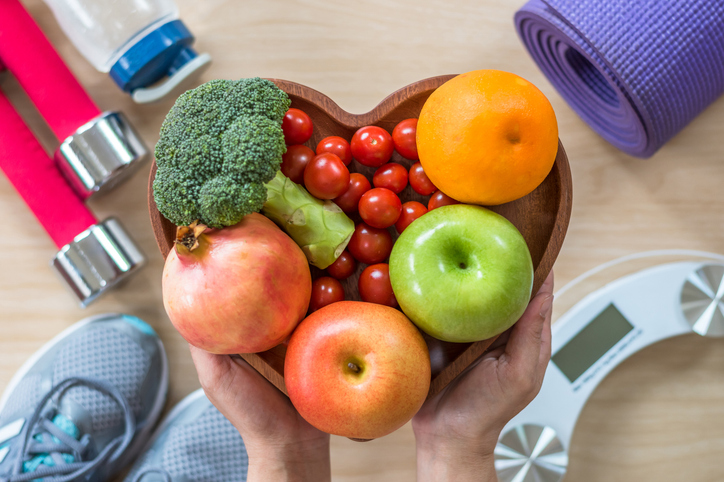
Vitamins are essential micronutrients found in a wide variety of foods, including fruits, vegetables, grains, and meats. For example, vitamin C is abundant in citrus fruits and broccoli, vitamin D is found in fatty fish and fortified milk, and the B vitamins are in whole grains, eggs, and leafy greens. Similarly, vitamin K is in leafy greens and broccoli, while vitamin A is in carrots and sweet potatoes.
But what does this mean? Well, each vitamin serves a purpose to benefit the body’s needs. There are 13 vitamins that the human body needs to function properly. Let’s explore.

What Does Each Vitamin Do?
Vitamin A supports eyesight and immune function. Vitamin A can be found in carrots, sweet potatoes, eggs, liver, milk, and spinach.
B Vitamins consist of B1, B2, B3, B5, and B12. B Vitamins help convert food into energy, create new blood cells, and keep skin healthy. These can be found in foods such as eggs, soybeans, fish, fortified grains, cereals, asparagus, spinach, broccoli, legumes, meat, poultry, milk, and cheese.
Vitamin C helps with wound healing. It maintains healthy skin and protects cells. Vitamin C can be found in a wide variety of foods, including oranges, strawberries, tomatoes, kiwi, bell peppers, and broccoli.

Vitamin D helps maintain bone strength and supports the immune system. Vitamin D can be found in fatty fish, fortified milk, and cereal. Our bodies also get Vitamin D from the sun, but often in the Northeast, we cannot access enough sunlight to get our fill of Vitamin D.
Vitamin K aids in blood clotting and supports bone health. Vitamin K can be found in cabbage, eggs, spinach, broccoli and kale.
To learn more about vitamins and minerals, including the recommended amounts of each, the Dietary Guidelines for Americans are a great place to start. Your doctor can also give you a referral to a registered dietitian if you have specific dietary concerns or questions.
We can make 2026 a year of healthy choices by focusing on nourishing our bodies with the proper foods our bodies need. We don’t have to stress or overcomplicate it. Simply stick to a plan to eat foods rich in vitamins that provide the energy that you need for the day. Small changes focusing on health go a long way. So, ditch the “diet talk” and fill your plate with yummy nutritious foods. Your body and mind will thank you for it.
Did you find this blog post helpful? Please click the heart button!